
Supporting Infant and Toddler Self Care Through Thoughtful Classroom Setup

A classroom can either invite children into self-care or quietly make every need depend on an adult. For infants and toddlers, the room itself becomes part of the curriculum.
This weekend, our infant and toddler cohort met to talk about classroom setup, what is working, and what challenges keep showing up with students. The conversation kept coming back to one central idea: young children learn self-care when their environment helps them notice, understand, and respond to their own needs.
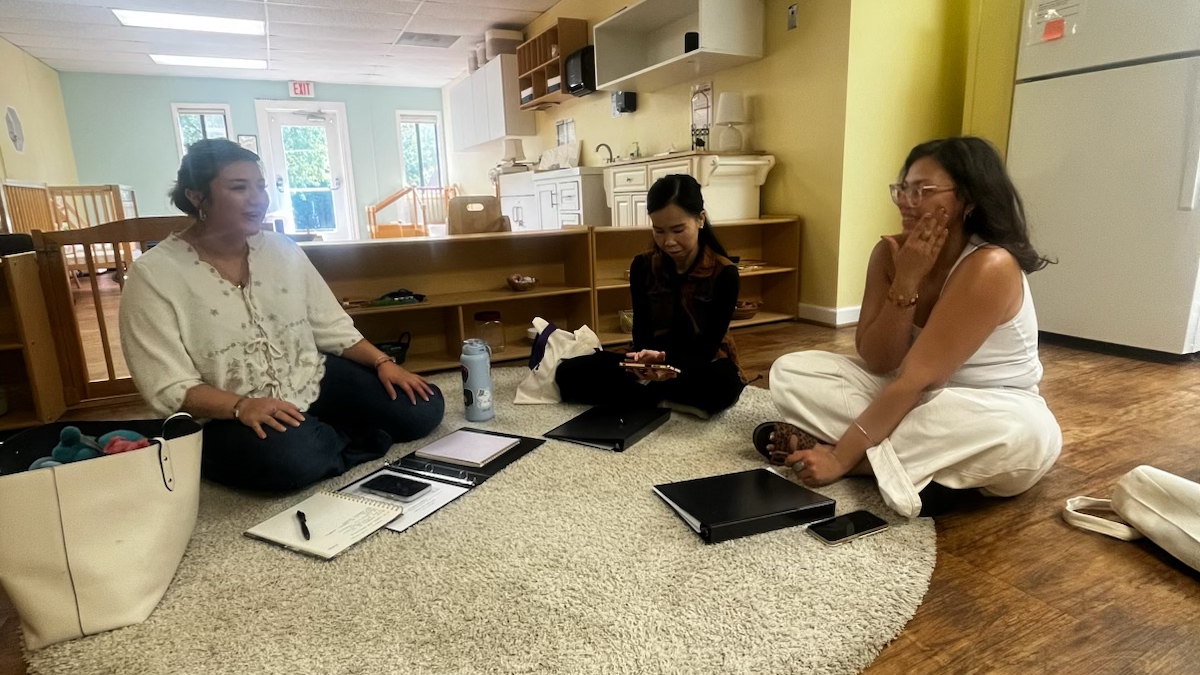
For infants, the goal is early body awareness. They are learning what hunger, tiredness, temperature, discomfort, and connection feel like. For toddlers, the goal grows into a relationship with the environment. They begin to learn where things happen, how to use materials, and how to take care of their needs with growing independence.

Infants need spaces that help them notice their bodies
Infants cannot yet say, “I am cold,” “I am hungry,” or “I need a break.” But they are already building the foundation for those ideas. Every diaper change, feeding, cuddle, stretch, and rest period teaches them something about their body.
A thoughtful infant classroom supports this by offering predictable places for care and movement. Babies begin to connect certain spaces with certain needs.
For example:
A feeding area teaches that hunger is noticed and responded to.
A diapering area teaches that discomfort and cleanliness matter.
A soft floor area teaches that the body can move, reach, roll, stretch, and rest.
A cozy space teaches that tiredness and overwhelm have a place to land.
These areas do not need to be fancy. They need to be consistent, calm, and easy for adults to use with care. Infants read tone, pace, and routine. When adults slow down and narrate what is happening, the room becomes even more meaningful.
“I see you turning your head away. Your body is telling us you need a pause.”
“You are kicking your legs. Let’s give your body room to move.”
“You feel cold after your diaper change. I’m going to help you get warm.”
This kind of language helps infants connect sensation with care. Over time, they begin to trust that their signals matter.
Toddlers need environments they can use with purpose
Toddlers are in a new stage of self-care. They are not only feeling needs, they are beginning to remember where and how those needs can be met.
The toddler classroom should help children bond with their environment. That bond grows when the room is set up in a way that makes sense to them. They learn, “This is where I wash my hands,” “This is where I sit when I eat,” “This is where I find my sweater,” and “This is where I go when I need the toilet.”

That connection matters because toddlers often know more than they can calmly organize. A child may know they are hungry but not know what to do next. They may feel too warm but not know where their extra layer belongs. They may feel the urge to use the toilet but need the environment to guide them.
A classroom can support these needs by making routines visible and reachable.
Helpful features include:
Low hooks for coats and sweaters
A clear snack or meal area
Easy access to tissues and trash cans
A calm diapering or toileting space
Picture labels for common materials
A defined rest area with familiar comfort items
Small step stools near sinks, when safe and supervised
The goal is not full independence right away. The goal is participation. A toddler who pulls down their own pants before a diaper change, carries a bowl to the table, finds their blanket, or places a wet shirt in a bin is practicing self-care.
Small steps count.
Care areas should answer real needs
The cohort conversation also brought up challenges. Children do not always use the room the way adults expect. They may dump baskets, crowd the sink, resist diaper changes, or run from one area to another. These behaviors can feel like defiance, but they often point to a mismatch between the child’s need and the room’s setup.
If toddlers crowd a water area, they may need clearer access, more time, or a second water routine. If children resist the toilet area, it may feel too exposed, too rushed, or too far from where play happens. If a child becomes unsettled during transitions, the routine may need more predictability.
One helpful question is:
What need is the child trying to meet, and does the classroom clearly show where that need belongs?
Hunger, temperature, and elimination are strong examples.
For hunger, toddlers benefit from knowing where food routines happen. A consistent eating space, child-sized seating, and simple cleanup steps help them understand that hunger has a rhythm and a place.
For temperature, children need help connecting body signals with clothing choices. A sweater basket, low hooks, and adult language can support this. “Your hands feel cold. Let’s find your sweater.” “You are pulling at your sleeves. Your body may be too warm.”
For elimination and toilet training, the setup matters deeply. The path to the bathroom or toilet area should be predictable. Extra clothes should be nearby. Children should know where to place soiled items with adult help. The space should feel calm, not shameful or rushed.

Adults make the setup meaningful
Furniture and labels matter, but adults bring the environment to life. A perfectly arranged room will not teach self-care if routines feel hurried or disconnected. Children need adults to slow down, name what is happening, and invite participation.
That might sound like:
“Your body is hungry. Let’s go to the table.”
“You touched your diaper. Let’s check if your body needs a change.”
“You are shivering. Let’s find something warm.”
“You sat on the potty. You listened to your body.”
These phrases do more than manage behavior. They teach children that body signals are information. They also protect the child’s dignity. Self-care is not just about doing things alone. It is about learning that the body deserves attention and respect.
For infants, this may look like slow caregiving routines with eye contact and gentle narration. For toddlers, it may look like giving enough time to try, even when an adult could do it faster.
A strong classroom setup supports both.
The room should grow with the children
Infant and toddler rooms need regular reflection because children change quickly. What supported the group in September may not fit by January. A crawling infant becomes a pull-to-stand explorer. A toddler who once needed full help with dressing may suddenly want to do every step alone.
That is why cohort conversations are so useful. They give educators time to ask practical questions:
Which areas are children using with confidence?
Where do children seem confused or frustrated?
Are materials placed for adult convenience or child participation?
Do routines help children understand their bodies?
Are we offering enough time for children to try?

Thoughtful classroom setup does not remove every challenge. Infants will still cry. Toddlers will still test limits. Potty training will still be uneven. But the environment can reduce confusion and make self-care easier to learn.
The biggest takeaway is simple: the classroom should tell children, in a clear and gentle way, “Your needs belong here, and we will help you learn how to care for them.”
When infants become familiar with their bodies and toddlers learn how to use their environment, self-care begins to grow from the inside out.


Comments