
Creating a Safe and Encouraging Montessori Classroom for Toddlers: Tips on Furniture Arrangement

Setting up a classroom for toddlers that balances safety with freedom of movement and independence can be challenging. The Montessori philosophy offers a clear approach: create an environment where toddlers feel secure yet are encouraged to explore and learn on their own. This post explores practical ways to arrange furniture and materials in a Montessori classroom to support toddlers’ natural curiosity while keeping them safe.
Designing for Safety and Independence
Toddlers need a space where they can move freely without constant adult intervention. Safety is essential, but it should not restrict their ability to explore. Montessori classrooms achieve this by carefully selecting and arranging furniture and materials that are accessible and appropriate for toddlers’ size and abilities.
Use Low, Open Shelving for Materials
One of the core principles in Montessori classrooms is accessibility. Shelves should be low enough for toddlers to reach materials without help. Open shelving allows children to see all available activities clearly, which encourages choice and independence.
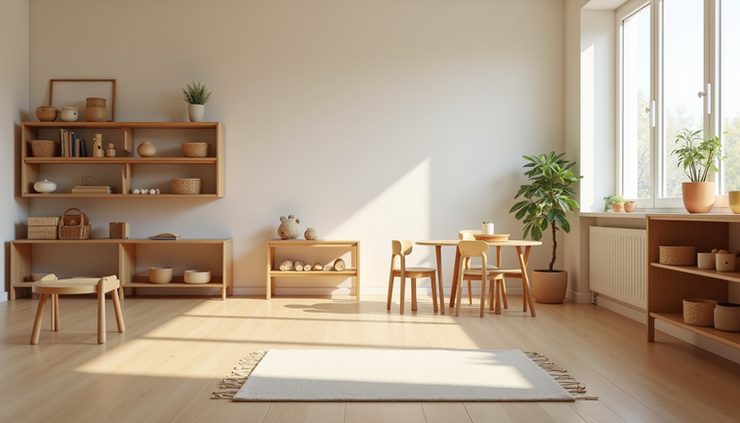
Example 1: Arrange shelves along the walls at toddler height, leaving the center of the room open. This setup creates a clear pathway for movement and reduces clutter.
Use baskets or trays on shelves to organize materials by activity type, such as puzzles, blocks, or art supplies.
Ensure shelves are sturdy and securely anchored to the wall to prevent tipping.
This arrangement supports toddlers in selecting activities independently and returning materials to their place, fostering responsibility.
Create Defined Activity Zones with Child-Sized Furniture
Dividing the classroom into zones helps toddlers understand where different activities happen. Use child-sized tables, chairs, and rugs to define these areas clearly.
Example 2: Place a small table and chairs in one corner for art and sensory activities. Nearby, set up a cozy reading nook with a low bookshelf and soft cushions.
Use open floor space for movement-based activities like building blocks or simple puzzles.
Keep pathways wide and clear to allow toddlers to move safely between zones.
This zoning helps toddlers focus on one activity at a time and move confidently from one area to another, promoting independence and concentration.
Additional Tips for a Montessori Toddler Classroom
Natural Materials: Choose wooden furniture and natural fibers for rugs and cushions. These materials are safe, durable, and create a calm atmosphere.
Rounded Edges: Select furniture with rounded corners to reduce injury risk.
Soft Lighting: Use natural light as much as possible, supplemented by soft, warm artificial lighting.
Minimal Decorations: Keep walls simple with a few child-made artworks or nature-inspired images to avoid overstimulation.
Accessible Storage: Place hooks or cubbies at toddler height for personal belongings like coats and backpacks.
Encouraging Movement and Exploration
Montessori classrooms encourage toddlers to move freely and explore their environment. Furniture should not block natural pathways or create obstacles. Open floor space is essential for physical development and creativity.
Use rugs or mats to define safe play areas without restricting movement.
Avoid overcrowding the room with too many materials or furniture pieces.
Rotate materials regularly to maintain interest and challenge.
Supporting Independence Through Practical Design
Every element in a Montessori classroom should support toddlers’ ability to do things for themselves. This includes:
Easy-to-open cabinets or bins for snacks and drinks.
Child-sized sinks or handwashing stations if possible.
Clear labeling with pictures and words to help toddlers identify where items belong.
These features build confidence and reduce frustration, making toddlers feel capable and respected.
Setting up a Montessori classroom for toddlers requires thoughtful furniture arrangement that balances safety with freedom. Using low, open shelving and clearly defined activity zones with child-sized furniture creates an environment where toddlers can move freely and develop independence. By focusing on accessibility, safety, and simplicity, educators can foster a space that supports toddlers’ natural desire to explore and learn.


Comments